Can I Put Breast Milk Back in the Fridge After Warming It Up
When it comes to the topic of breast milk, there are many questions that come up. One question, in particular, is "How long does my breast milk last after warming?" This article will help answer this question and provide some helpful tips on how to keep your baby's food safe for consumption.
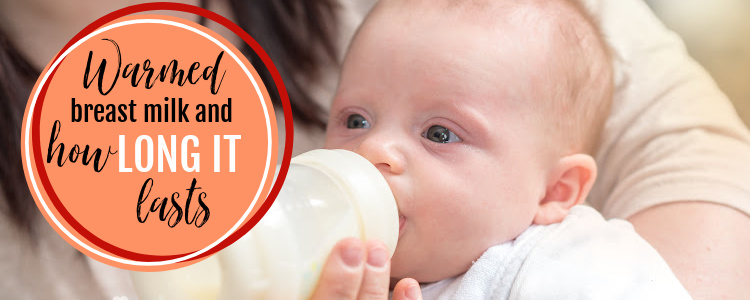
We've all been there – you just warmed up a bottle of your baby's milk only to realize they didn't want to drink all (or any) of it. The thought of pouring that precious liquid gold that you pumped with your breast pump down the drain is so painful. But is it necessary?
Breast milk storage guidelines are important to follow – while breast milk is quite resilient, it's still a consumable product and you want to make sure it's safe to feed your baby. Anything you put in your baby's mouth should be handled with care.
The good news is – just because you warmed breast milk and your baby didn't drink the entire bottle of breast milk doesn't mean you have to throw it out – but there are some time limits you need to keep in mind if you want to have it for later use
.This information is mainly geared toward term babies. With premature babies, it is a good idea to be even extra cautious with leftover milk. Always work with a lactation consultant to address your specific situation and the best way to save and/or use unused milk.
- What Professionals Say
- What the Research Says
- Should I Keep Warmed Milk at Room Temperature or in the Fridge?
- Can I Reheat Breast Milk?
- Warmed Milk That Has Been Eaten From
- What Moms Actually Do
- Preventing Wasted Breast Milk
- Wait to heat milk until you are sure you need it
- Freeze or store milk in smaller portions
- Defrost milk in the fridge
- Give baby cold milk
- How to Warm Breast Milk
- How to Store Breast Milk Properly
- How to tell if breast milk is bad?
- Conclusion
- More Blog Posts You Might Enjoy
What Professionals Say
There are a lot of articles and opinions on this online – some vary from saying it lasts two hours after warmed while others say that it should be fine for 24 hours.
The problem is, most of these articles don't share any sources for this information (which, to be honest, happens a lot with breastfeeding information. Frustrating!) They are professional organizations, but I wish that they would provide some kind of research behind these recommendations.
According to the Center for Disease Control (CDC):
"Once breast milk is brought to room temperature or warmed, use it within 2 hours."
The American Academy of Pediatrics (AAP) says this:
"Milk has a biology that leads it to maintain its nutrient value and discourage bacterial growth when kept at room temperature or in the refrigerator. Raw milk likely has better biology than frozen with intact milk fat globules and maternal cells. After 4 hours at room temp or 4 days in the refrigerator, it may be best to freeze milk for long-term storage. Milk is generally considered safe for feeding for up to 12 months of freezer storage. The colder the freezer temperature the better and the less exposure to high temperatures the better. A deep freezer is better than the door of a standard freezer." Source
Obviously, that doesn't directly talk about warmed milk, but it does discuss some interesting things. They mainly just point to the CDC website for more information on storage. However, on HealthyChildren.org, which is run by the AAP, they say: "Once breast milk is thawed: It can be stored in a refrigerator and must be used within 24 hours."
This also brings up the value of defrosting your milk in the fridge from frozen. It hasn't been warmed at that point, so it does have a longer time clock on when you can use it.
Finally, here are the guidelines from the Academy of Breastfeeding Medicine (ABM):
"Once frozen milk is brought to room temperature, its ability to inhibit bacterial growth is lessened, especially by 24 hours after thawing. Previously frozen human milk that has been thawed for 24 hours should not be left out at room temperature for more than 2 hours. – Source
This sounds like after being brought to room temperature, there is a 24-hour period where you could feed the breast milk, and if it's been thawed for more than 24 hours, it shouldn't sit out for more than two hours. But to me, it sounds like if you have warmed it to room temperature, it should be okay for 24 hours (especially if you have refrigerated it).
This is the only professional resource that cites any research, which I will share below.
What the Research Says
SURPRISE! Another breastfeeding topic that has very little research done on it. I am not sure where the two-hour recommendation for the CDC comes from and why more hasn't been studied on this topic. So many parents and caregivers handle breast milk on a daily basis – you'd think there would be something.
I found a few pieces of research that slightly address the topic of warmed breast milk. The first two I will talk about are what the ABM reference in their guidance. I will admit that I am not the best at understanding all of the research, so make sure you read through them yourself.
First, we have "Do thawing and warming affect the integrity of breast milk". In this study, the researchers evaluated the pH, bacterial counts, host defense factors, and nutrients of breast milk that had been thawed and warmed.
The milk was thawed and stored in the refrigerator for 24 hours before they warmed it. With this milk, "Milk pH and bacterial colony counts declined while free fatty acids rose with processing. Refrigeration of thawed milk resulted in greater declines in pH and bacteria and increases in free fatty acids. Bacterial colony counts and free fatty acids increased with maintenance at room temperature."
Their final conclusion was, "fresh breast milk, fresh frozen breast milk, and breast milk frozen for 21 days demonstrated a significant inhibition of bacteria growth. A trend toward gradual loss of inhibiting activity was noted with prolonged freezing of breast milk. Although freezing may quantitativly decrease the amount of some breast milk host-defense factors, it cannot be assumed that comparable functional reductions will necessarily result.
So it didn't really provide a ton of guidance there.
The second study entitled "Effect of storage processes on the bacterial growth-inhibiting activity of human breast milk"
To be honest, I had a hard time totally understanding this study, but the conclusion said, "…fresh breast milk, fresh frozen breast milk, and breast milk frozen for 21 days demonstrated a significant inhibition of bacteria growth. A trend toward gradual loss of inhibiting activity was noted with prolonged freezing of breast milk. Although freezing may quantitativly decrease the amount of some breast milk host-defense factors, it cannot be assumed that comparable functional reductions will necessarily result."
Finally, here is some information from an undergraduate thesis in 1998. by Rachel Brusseau. It was called, "Bacterial Analysis of Refrigerated Breast Milk Following Infant Feeding."
In her thesis and study, the bacterial growth levels of expressed milk that had been partially consumed and stored for 48 hours in the fridge. The milk was compared to the control, which was unconsumed milk.
Samples were taken every 12 hours and the study saw no significant difference in the bottles that had been partially consumed versus the control in 5/6 of the participants.
So, again, it doesn't directly address reheating warmed milk, but it does show evidence that the bacterial content of the milk may not be impacted significantly even if the baby has consumed some of the milk.Of course, this was just an undergraduate thesis and had a very small sample size. But it's interesting data nonetheless.
All in all, there really isn't a great study to show the importance of feeding milk that has been warmed within two hours. Maybe someone from the CDC will see this article and enlighten me further!
Should I Keep Warmed Milk at Room Temperature or in the Fridge?
The CDC says that if it's been warmed to room temperature or warmed (so with warm water or a bottle warmer), it should be used within two hours. However, if it's been thawed at room temperature but it's still cool, you might get a little more life out of it if you put it back in the fridge.
Research does support the idea that bacterial growth does slow with refrigeration, though, so if there's any chance you'll be offering the milk again, I would probably put it back in the fridge if it's been thawed at room temperature just to increase the longevity of it.
Room temperature is usually a range between 68 and 77 degrees Fahrenheit.
Can I Reheat Breast Milk?
There doesn't seem to be any real guidelines from the CDC or AAP about the practice of reheating breast milk that you've already heated once. If it's within the two-hour time frame that they suggest, you should be able to reheat it.
Warmed Milk That Has Been Eaten From
This is a whole other topic that I will dive more into another time – for now, I suggest you read this article from KellyMom.com entitled, "Reusing Expressed Breast Milk." It shares what information is available on the topic from various breastfeeding professionals and studies.
In general, it seems that most are okay with the idea of offering milk that has been touched by the baby's mouth within a few hours.
What Moms Actually Do
I always think it's interesting to get an idea of what other moms do with their milk in relation to what the recommendations are. I asked on my Instagram stories how long moms felt comfortable feeding milk after it's been warmed.
By and large, the majority of the moms who responded said they followed the CDC guidelines of two hours. However, I was surprised to see that a lot of moms said they won't feed it if it's been more than hour than it was warmed – many of which said that is what they were told. This is likely due to the recommendations that are given for formula. There were also a handful of moms who said between 4-6 hours.
Here are a few comments that stood out:
"Smell test. If it looks off, I don't. I don't pay attention to time."
"2 hours. I think that's the CDC recommendation so I have hubby follow that. Daycare one hour."
"I do the 1-2 hours but I have stretched the two hours to 2 1/2 before and it was okay."
"Preemie here! If she doesn't finish, it's gone!"
"I don't heat it, LO eats it cold straight from the fridge!"
"Right after. It's never really that hot because I warm it for less than recommended"
"I Know it's not within the advice, but I'd say around four hours."
Preventing Wasted Breast Milk
No one wants to waste breast milk, which is why so many parents wonder if they can push the limits after warming breast milk. If you are finding yourself wasting a lot breast milk, here are a few tips:
Wait to heat milk until you are sure you need it
This is the simplest thing to do – don't heat the breast milk until you are absolutely sure you need it! Keep it in it's storage containers in the coldest environment that makes sense for the situation.
Freeze or store milk in smaller portions
It can be easy to store your milk in large amounts, such as six ounces, since that's what many breast milk storage bags have as their capacity. However, feeding large amounts of breast milk like that is not really advisable. Unless you are defrosting milk for the entire day, freezing and defrosting milk in smaller amounts is key for avoiding wasting milk.
Defrost milk in the fridge
If you can, defrost milk in the fridge. It will last longer after it's been defrosted, and if, during the defrosting process, you realize you aren't going to feed it, you might be able to refreeze the breast milk if there are still ice crystals in the milk bag. Even if it's completely defrosted, you'll have 24 hours from that time if it's kept in the fridge. If you have it in a storage container that is easy to pour from, you can easily pour some milk out to defrost and then keep the unused breast milk in the firdge.
Give baby cold milk
There is no rule that says your baby has to drink warm milk. Some babies are totally fine drinking cold milk straight from the fridge. If you don't warm it to room temperature or warmer, you can just keep it in the fridge – and it lasts longer.
Know Care Provider Rules
Often, a child care provider or daycare has rules that they must follow in regards to the handling of breast milk. They are often more strict than you might be, so be aware of what are grounds in the care center for discarding breast milk.
How to Warm Breast Milk
There are different ways to warm your bottles. The safest way to warm your milk is actually by placing it in a bowl of warm water, however, if you don't have access to hot water, simply placing the bottle under warm running tap water for several minutes will do.
Bottle warmers are always an option for heating breast milk – there are ones that you can use at home and ones that you can take on the go. Here are a couple of popular bottle warmers.
- Philips Avent Bottle Warmer with Automatic Shut off
- Closer to Nature Portable Bottle Warmer
- Tommee Tippee 3 in 1 Bottle Warmer
- Dr. Brown's Deluxe Bottle Warmer
You should never heat breast milk in the microwave. It may kill some nutrients and there is also a potential for hot spots.
I do recommend that you thaw breast milk in the fridge.
How to Store Breast Milk Properly
The best way to make sure your breast milk lasts as long as possible is by storing it properly. I go into this in more detail in this article – How to Store Breast Milk – but here are some best practices you should consider following.
After you have pumped fresh breast milk, you can keep it at room temperature for about four hours before you need to put it in the fridge of freezer. When you put it in the fridge, I recommend putting it at the back of the fridge – and the same with the freezer. This helps keep it colder and prevent any huge swings in temperature changes when the doors are open.
Make sure you use clean breast milk bottles when you are pumping – clean them first with soapy water and dry them off completely. It's really just important to have clean conditions as much as possible when expressing and storing the milk.
You can combine milk that's been in the fridge from different days as long as the temperature is the same. The general guidelines for keeping milk in the fridge is about four days. You can store it in bottles with lids in the fridge but you should transfer to breast milk bags before freezing.
How to tell if breast milk is bad?
Breast milk is quite resilliant, but it still can go bad. First of all, do the sniff test. If it smells foul, I probably wouldn't feed it.
Milk does tend to separate, so it's not uncommon for it to have. athicker layer on top. However, once it has warmed, you should be able to swirl it back together. If you find it's just chunky after trying to remix or it remains separated, it may have spoiled.
If you're feeling brave, you can even taste it yourself. Keep in mind that high lipase milk may taste soapy or metallic (or smell that way, too), but it doesn't mean that it's unsafe to eat. Understanding how lipase affects breast milk – and what you can do about it – is important.
Conclusion
All in all, what I can see is that there isn't a lot of research. I will just have to stand with the guidelines from the CDC and AAP on this one, with the caveat that I think you have the ability to make the right decision for your baby! Let's hope some more research is done on this topic at some point in the (near) future!
More Blog Posts You Might Enjoy
- The Best Breastmilk Freezer Storage Ideas All New Parents Need to Know!
- Pumping Through a Power Outage: What You Should Know
- How Long Will Frozen Breast Milk Last in a Power Outage?
Can I Put Breast Milk Back in the Fridge After Warming It Up
Source: https://thebreastfeedingmama.com/how-long-does-breast-milk-last-after-warming/

Post a Comment for "Can I Put Breast Milk Back in the Fridge After Warming It Up"